Keeping meals at the right serving temperature is one of the biggest challenges in food service. Whether you manage a restaurant, host family gatherings, run a catering business, or organize banquet events, the right equipment can protect food quality and improve the guest experience. A poor setup can lead to uneven heat, dried-out dishes, and unnecessary stress during service.
That is why investing in dependable warming equipment matters. A well-designed food warmer helps maintain texture, flavor, and food safety while making service smoother and more organized. From self-serve buffet lines to back-of-house meal prep stations, the right unit can support both convenience and presentation. In this guide, we will look at the key features to compare, the differences between common warming solutions, and practical tips for choosing equipment that fits your space, menu, and service style.
Why warming equipment matters in food service
Hot food should stay hot without losing moisture, texture, or visual appeal. That sounds simple, but anyone who has worked a long event knows how quickly quality can drop when heat is inconsistent.
Good warming equipment supports several important goals:
- Food safety: Holding dishes at proper temperatures reduces risk.
- Better taste and texture: Sauces stay smooth, meats stay juicy, and sides remain enjoyable.
- Improved workflow: Staff can prepare ahead and serve more efficiently.
- Stronger presentation: Guests notice when food looks fresh and well maintained.
- Less waste: Consistent heat can help prevent items from drying out or becoming unusable.
The right choice depends on what you serve, how long you serve it, and how often the setup needs to move.
When a food warmer makes sense for service
Not every operation needs the same type of warming solution. Some businesses need compact countertop units, while others need larger holding cabinets or buffet-ready stations. A food warmer is often the better option when your focus is steady temperature control over longer periods.
This type of equipment works especially well for:
- Busy restaurants managing prepared items during peak hours
- Catering teams transporting and serving hot dishes
- School, hospital, or institutional meal service
- Cafeterias and self-serve stations
- Event venues with high-volume food turnover
A quality unit helps maintain consistency across different menu items. Soups, cooked vegetables, rice dishes, pasta, and proteins all benefit from controlled holding conditions. Instead of rushing food out all at once, staff can prepare in batches and keep items ready without sacrificing quality.
Another advantage is flexibility. Many models are designed for different pan sizes, adjustable thermostats, and easy cleaning. That makes them useful for both everyday service and special events.
Key features to compare before buying
Choosing warming equipment is easier when you focus on practical needs instead of marketing language. Before making a purchase, evaluate the following features carefully.
Capacity and pan compatibility
Start with volume. How much food do you need to hold at one time? A small café may need a compact countertop model, while a catering company may need equipment that supports multiple trays at once.
Look for:
- Full-size or half-size pan compatibility
- Depth options for different menu items
- Enough capacity for peak service periods
- Room for future growth if your operation expands
Buying too small creates service delays. Buying too large can waste energy and take up valuable space.
Heat consistency
Even heat distribution is one of the most important factors. Inconsistent warming can leave one section too cool and another too dry. Adjustable controls help staff respond to different recipes and serving durations.
Consider equipment with:
- Reliable thermostatic control
- Even heating across the holding area
- Recovery speed after frequent opening
- Suitable temperature range for your menu
Build quality and durability
Commercial kitchens and event operations are demanding environments. Durable materials reduce maintenance issues and help equipment last longer.
Stainless steel construction is often preferred because it is:
- Easy to sanitize
- Resistant to rust and corrosion
- Strong enough for daily commercial use
- Visually clean and professional
Handles, lids, hinges, and control knobs should also feel sturdy, not flimsy.
Portability and setup needs
Some units stay in one place. Others move between prep kitchens, banquet halls, and off-site locations. If mobility matters, think about transport before you buy.
Helpful details include:
- Locking wheels or compact dimensions
- Lightweight but durable construction
- Simple plug-and-use operation
- Easy loading and unloading for event teams
Cleaning and maintenance
No one wants equipment that is difficult to clean after a long shift. Smooth surfaces, removable pans, and accessible controls make daily maintenance easier.
Ask yourself:
- Are parts removable?
- Are surfaces easy to wipe down?
- Will staff need special tools to clean it properly?
- How quickly can it be reset for the next service?
When to choose a chafing dish for buffet setups
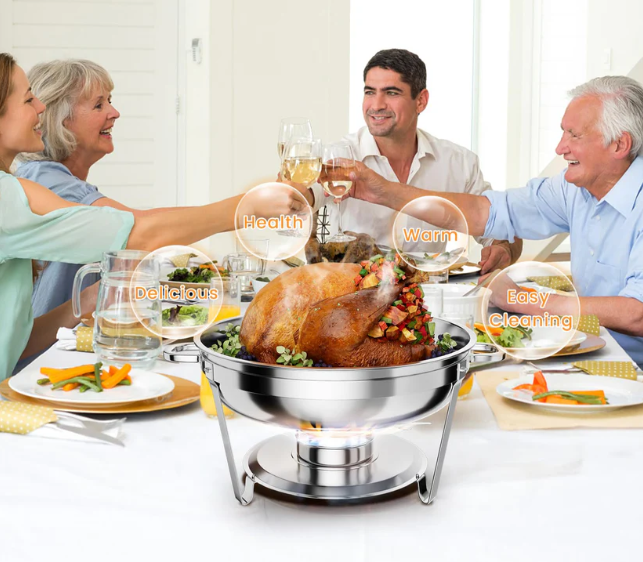
For presentation-focused service, buffet lines, and formal events, a chafing dish is often the preferred solution. It combines warming function with table-ready appearance, which makes it especially useful for weddings, banquets, hotel breakfast service, and catered gatherings.
A chafing dish is typically used when guests serve themselves or when food needs to remain attractive on display for an extended period. It creates a polished, organized setup while helping hold temperature during meal service.
This option is ideal for:
- Buffets and self-serve stations
- Banquet halls and wedding venues
- Corporate events
- Holiday gatherings
- Hotels and hospitality service
If your priority is elegant presentation combined with practical heat retention, a chafing dish can be a strong addition to your serving lineup.
Comparing buffet presentation and back-of-house holding
Many buyers struggle because both warming solutions seem useful. The better choice comes down to where and how you serve food.
Best for back-of-house efficiency
For prep areas, kitchen pass lines, and operations that need stable heat with minimal presentation focus, enclosed or countertop warmers usually make more sense. They support workflow and help staff manage volume with less disruption.
These are often better for:
- Batch cooking
- Pre-service staging
- Fast-paced kitchen environments
- Long holding times
- High-turnover menu items
Best for front-of-house display
A chafing dish is often the better fit when guests will see the setup directly. It helps create a refined buffet layout and works well when visual appeal matters as much as function.
These are often better for:
- Guest-facing buffet service
- Formal or upscale events
- Temporary serving stations
- Menu items served in open pans
- Coordinated table presentation
Some businesses benefit from both. A restaurant or catering team may hold items in kitchen equipment first, then transfer selected dishes into buffet service pieces for presentation.
Matching equipment to your menu
Your menu should guide your purchase. Different foods respond differently to heat and holding time, so equipment needs vary depending on what you serve most often.
Moist dishes
Items like curries, stews, gravies, macaroni dishes, and braised proteins usually hold better because they retain moisture naturally. These are more forgiving, but they still need stable heat to avoid scorching at the edges.
Dry or delicate items
Fried foods, roasted vegetables, pastries, and grilled proteins require more care. Too much heat can ruin texture quickly. In these cases, moderate holding temperature and shorter service windows matter more than maximum heat.
Breakfast and brunch service
Egg dishes, pancakes, sausages, and breakfast potatoes often need equipment that supports steady, visible service. Buffet-oriented pieces can work well here, especially for hotels and event venues.
Large-event catering
For multi-course events or all-day service, combine portability, dependable recovery time, and easy cleaning. You need equipment that performs well under pressure and resets quickly between service rounds.
Practical buying tips for businesses and event hosts
Before making a final decision, think beyond the product itself. The best purchase is one that fits your real operating conditions.
Use this checklist:
- Measure your available counter or serving space
- Estimate average and peak food volume
- Decide whether the unit will be stationary or mobile
- Consider your menu’s moisture level and holding time
- Check power requirements before purchase
- Think about cleaning time after service
- Match the equipment style to your guest experience
It is also smart to think about seasonality. If your business handles holiday rushes, wedding season, or weekend catering surges, choose equipment that can support demand without forcing rushed upgrades later.
Common mistakes to avoid
Even experienced buyers sometimes choose the wrong setup. A few common mistakes can lead to frustration, wasted money, and inconsistent food quality.
Buying based on appearance only
Stylish equipment matters, especially for events, but performance should come first. Attractive design cannot fix poor heat retention or weak construction.
Ignoring service duration
Some foods only need short-term holding. Others sit through long buffets or staggered meal periods. Choose equipment based on realistic timing, not ideal conditions.
Overlooking staff workflow
If equipment is hard to refill, awkward to clean, or difficult to transport, staff efficiency suffers. Convenience matters more than many buyers realize.
Choosing the wrong size
Undersized equipment creates stress during busy periods. Oversized equipment can waste space and energy. Always buy with both current and expected demand in mind.
FAQ
What is the best option for keeping buffet food hot during events?
For guest-facing buffet service, the best choice often depends on presentation needs and menu style. A chafing dish works especially well for elegant display, while enclosed holding equipment is better for kitchen staging and larger-volume prep.
How do I choose the right size warming equipment?
Start by calculating how many guests you serve during peak periods and how many trays or pans you need available at once. Then match those numbers to pan capacity, counter space, and service time.
Is a food warmer good for daily restaurant use?
Yes, a food warmer is a strong option for daily commercial use when you need reliable holding temperatures, workflow support, and consistent food quality during busy service hours.
What foods hold best in warming equipment?
Moist foods such as soups, sauces, braised meats, rice dishes, and pasta usually hold best. Dry or crispy foods need more careful temperature control and shorter holding times.
Can catering companies use more than one warming solution?
Absolutely. Many caterers use back-of-house holding equipment for preparation and transfer selected items to buffet service pieces for the final presentation.
Conclusion
Choosing the right warming equipment is not only about keeping meals hot. It is about protecting food quality, improving service flow, supporting food safety, and creating a better experience for guests. The best option depends on your menu, serving style, available space, and how visible the setup will be during service.
If your priority is efficient temperature control for everyday operations, a food warmer can be a practical investment. If your focus is buffet presentation and polished event service, a chafing dish may be the smarter fit. Many businesses benefit from using both in different stages of service. By matching your equipment to real operational needs, you can serve food more confidently, reduce waste, and maintain a professional standard at every event.

- TM SIM Registration 2026 - March 31, 2026
- .How to Choose the Best food warmer for Catering, Buffets, and Events - March 24, 2026
- How Cinema Culture Influences Modern Food Habits - March 14, 2026